Ara Ní ń Rántí, Ẹ̀mí Ní ń Rí
Six Chapters of Black Witness
The Artist’s Manifesto
Intentional Witness
"In many African traditions, silence is often mistaken for respect and endurance for strength. My work exists to disrupt this sacred silence."
Ara Ní ń Rántí, Ẹ̀mí Ní ń Rí is a six-part visual testimony on the architecture of the Black interior life where the body holds what society refuses to name and the spirit demands that the truth be carried with dignity.
This series moves like a rhythmic pulse: from the stifled silence of trauma to the reclamation of the divine aura. By treating African aesthetics not as a trend but as a precise, lived language, I interrogate the friction between our inherited cultural masks and our individual right to freedom. This is not art for consumption; it is art for accountability. It is a reality check for a world that often sees our aesthetics but ignores our witness.
The Six Chapters of Black Witness
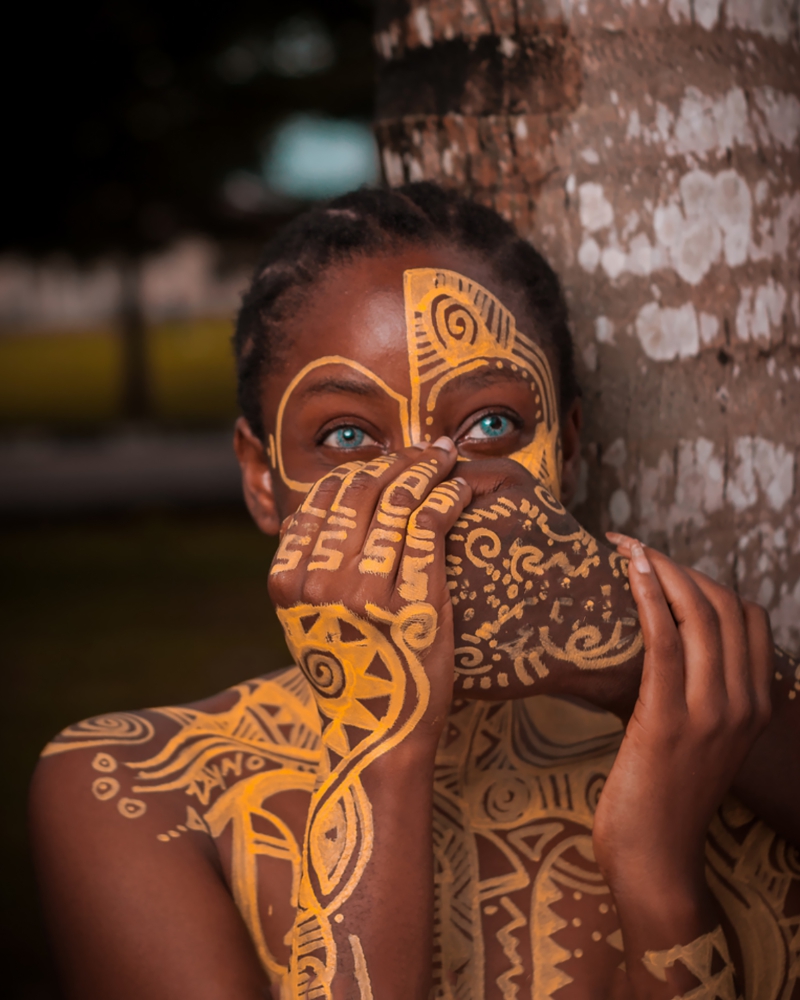
Ọmọbìnrin, Má Dákẹ́
(Girl, Don’t Be Silent)
This chapter investigates the silent flinch of the girl child and the systemic silencing of her experience. The paint on the skin serves as both an aesthetic and an accusation: a second skin that hides the aftermath of unspoken harm. The background tree stands as a traditional witness. In many communities, trees are the silent keepers of the judgements and burials that people refuse to speak aloud.

Ẹ̀wọ̀n Inú
(Prison of the Mind)
Trauma strips away the spectrum of colour, leaving only the weight of form and shadow. This black and white study captures the architecture of internal captivity: the rooms we construct in our minds when escape is impossible in reality. It honours the slow and unphotogenic labour of healing over the public spectacle of pain.
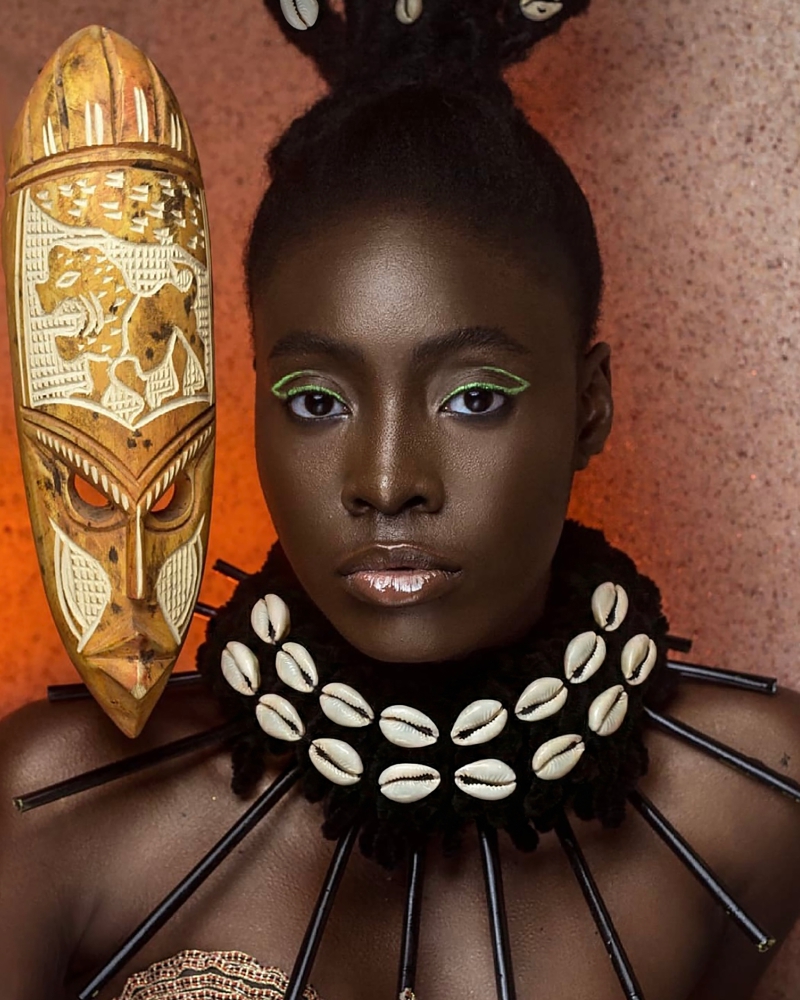
Ibojú Kì í Tani
(The Mask Does Not Lie)
The mask is a vessel of authority, not a costume. Placed alongside the subject, it questions who is seen as fully human versus who is archived merely as culture. It represents the duality of the mask: a sacred tool for continuity and a shield used to conceal household secrets.
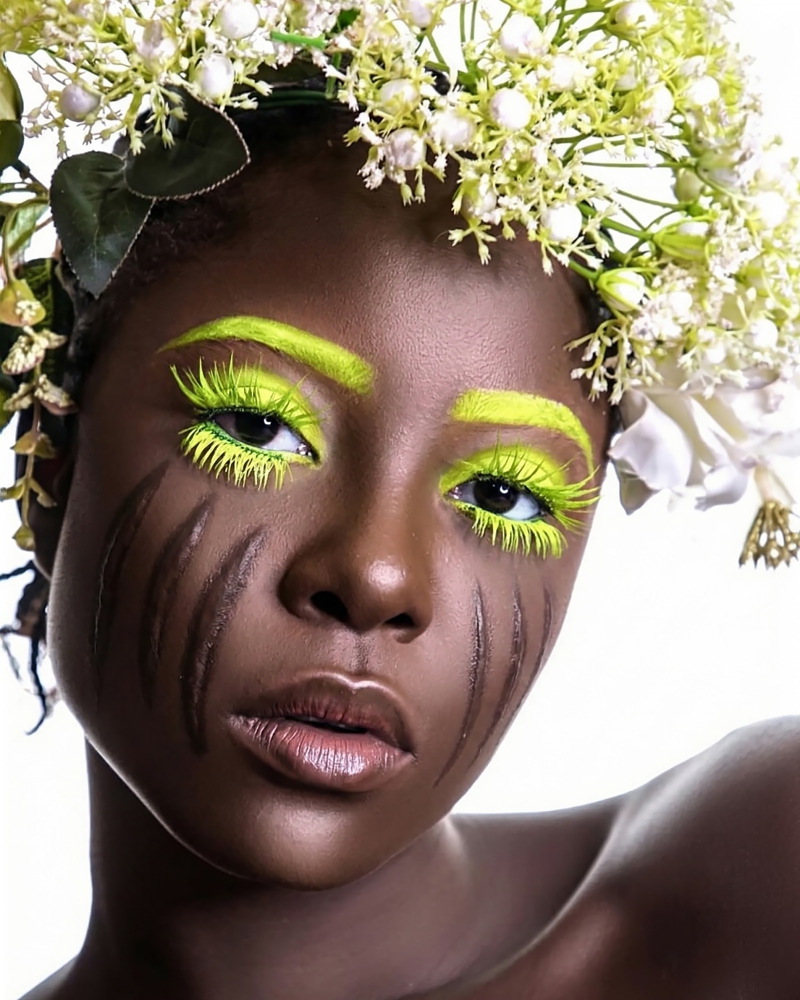
Àmi Lórí, Ìtàn Lẹ́nu
(Marks on the Face, History in the Mouth)
Here, identity shifts from the purely aesthetic to the weight of lineage. The tribal marks are a signature of home, while the neon lashes represent a disruptive futurism. This chapter reclaims the narrative of scarification from the tourist gaze, presenting it as a complex and lived inheritance.

Àwọ̀ jẹ́ Ohùn
(Colour Is a Voice)
Colour is a language of survival. The rainbow gradient is not decorative: it is the visual math of resilience. It represents the Sovereign Spectrum, the moment where the subject refuses to be flattened into a single story of suffering and instead reclaims their right to joy as a political act of resistance.
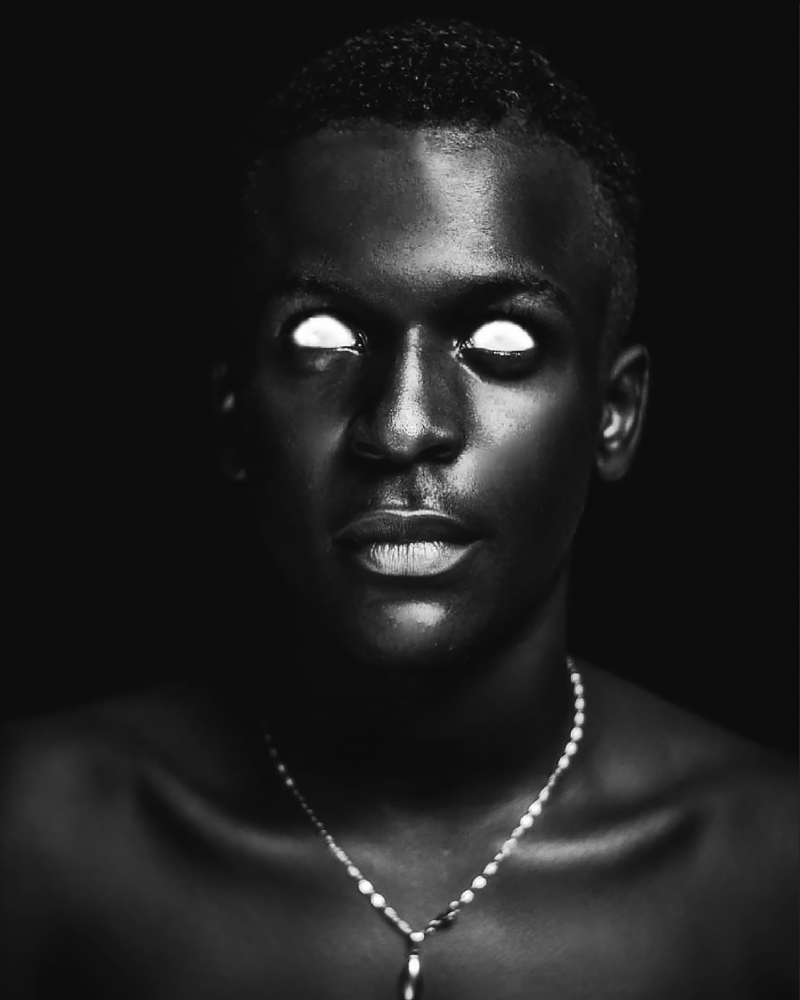
Ọlọ́run Ní Nú Mi
(The Divine Lives in Me)
The series concludes with the Inner Vision. The pupil less eyes represent spiritual sight: the gaze of the ancestors looking back at the world. It serves as a final verdict. When a society fails to protect its vulnerable, the divine remains as the ultimate witness and the source of true accountability.
The Role of the Witness
Olamide Adegboye’s practice operates at the intersection of conceptual photography, cultural memory, and visual testimony. Through his work, the camera moves beyond a simple recording device to become a tool of cultural preservation and ethical witnessing. His practice has transitioned from personal expression into significant public cultural contribution by creating a structured repository that bridges ancestral ritual and contemporary life.
By documenting cultural frequencies with intentionality, he provides empirical proof that heritage survives through the rigorous discipline of craft and the radical courage to remain visible. His work positions photography not merely as documentation but as a living archive, a space where cultural presence is affirmed and where images carry the responsibility of remembrance. In this way, Adegboye’s practice ensures that what is documented today becomes the history the future can trust while preserving the depth of the Black interior life within global visual culture.
A Living Archive (2023 - 2026)
A Visual Manifesto of Notting Hill Carnival
The Artist’s Manifesto
Stewardship of the Legacy
"I do not document Notting Hill Carnival simply because it is colourful. I photograph it because colour performs a labour that language cannot reach. What happens on these streets is not just celebration; it is memory in motion."
A Living Archive is a record of that memory. It is Caribbean rooted, London grown, and shared with the world. My work exists as proof that culture survives through discipline, craft, and the courage to remain visible in the centre of the city. Between 2023 and 2025, my role shifted. I began as an observer, but over time the work demanded something more: stewardship. I am not here to simply cover an event. I am here to help preserve a legacy.
What we document with care today becomes the history the future can trust. Images carry memory forward in ways words often cannot. Notting Hill Carnival deserves to be seen for what it truly is: not a moment, but a living legacy.
The Living Archive: Series Narrative
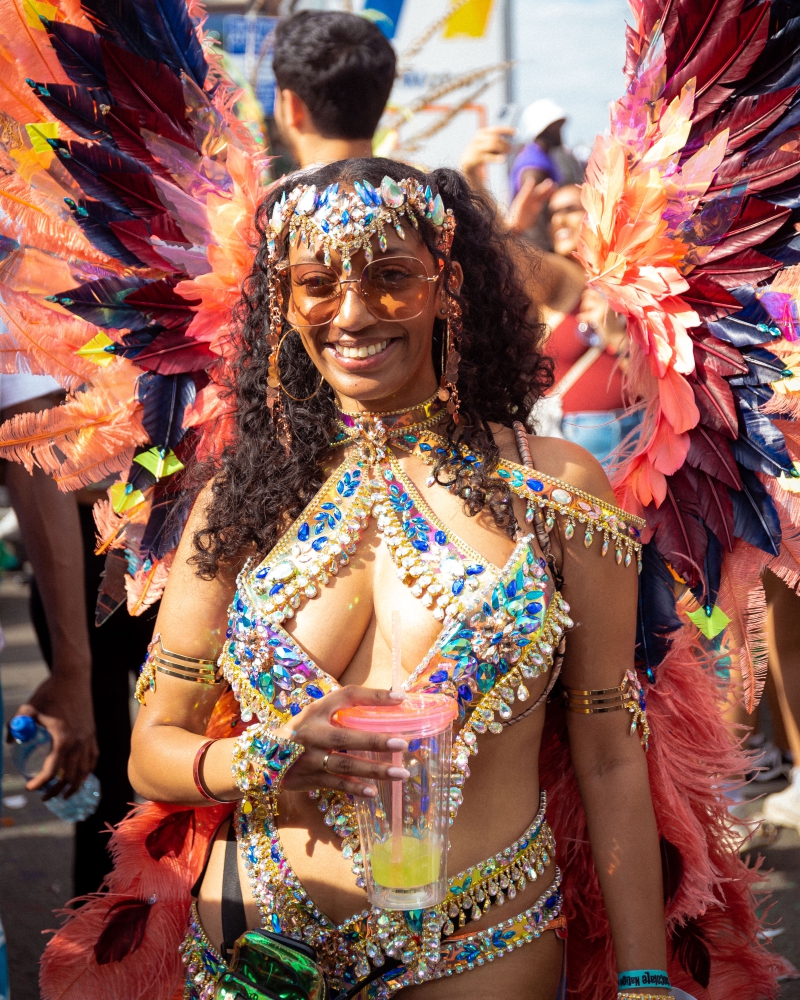
The Angel with Wings
Craft as Freedom What may appear as a costume is in fact a sculpture in motion. Carnival craft is built through months of labour: stitching, shaping, carrying, and enduring. The smile captured here is not performance but proof of something deeper, joy expressed publicly and claimed as a right rather than a spectacle.
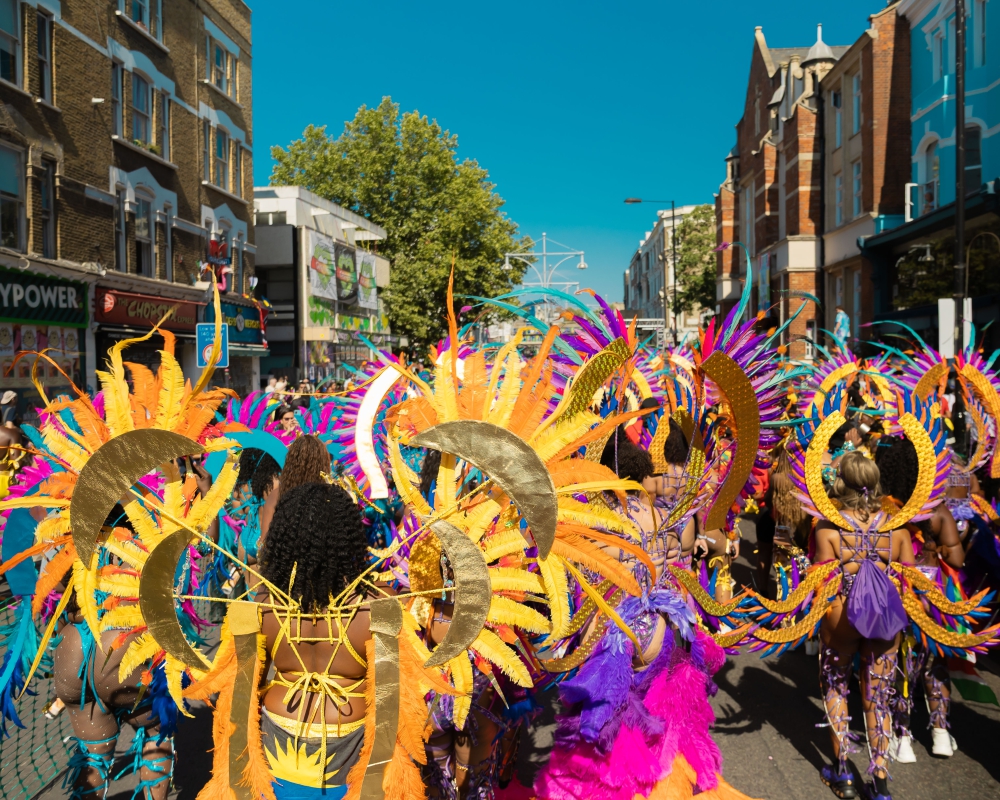
The Road as Museum
Collective Structure Carnival is never an individual act. It is a choreography of thousands moving together. This wide frame captures what could be described as a museum without walls: sound systems, routes, and bodies forming a structure that outsiders often mistake for chaos. What appears spontaneous is in fact carefully held together by collective rhythm.
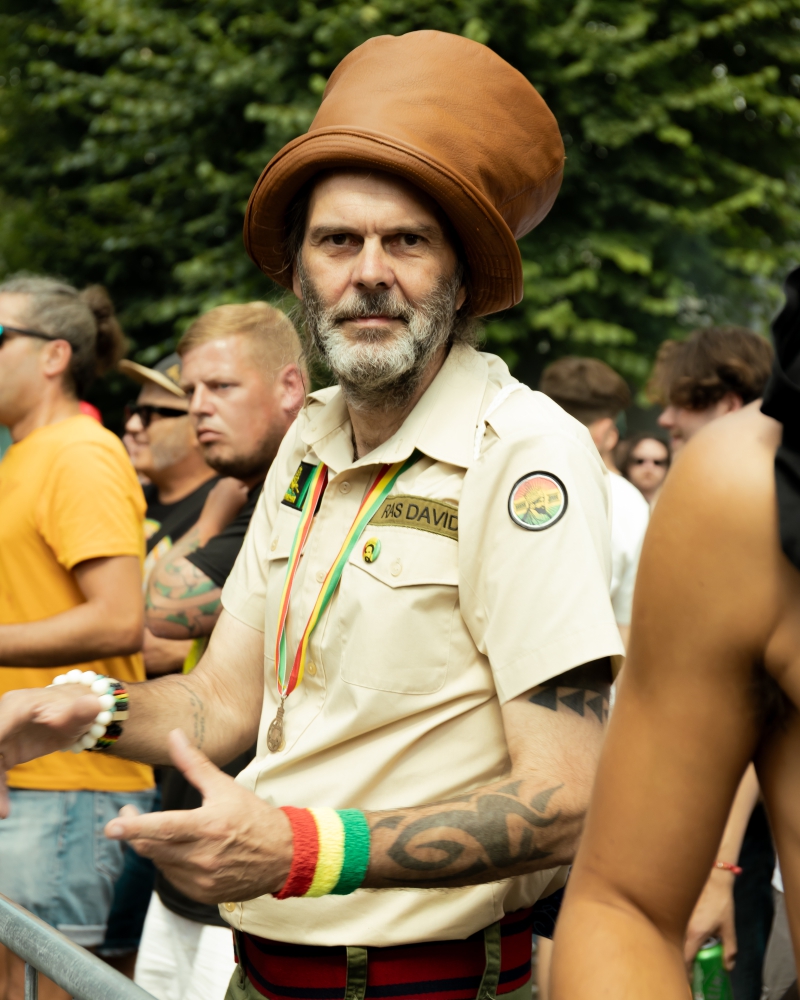
Witness and Stewardship
The Dignity of the Road This image recognises Carnival as a social agreement. For a moment, the city allows space for people to exist without shrinking themselves. Different personal histories occupy the same road and share the same declaration of belonging.
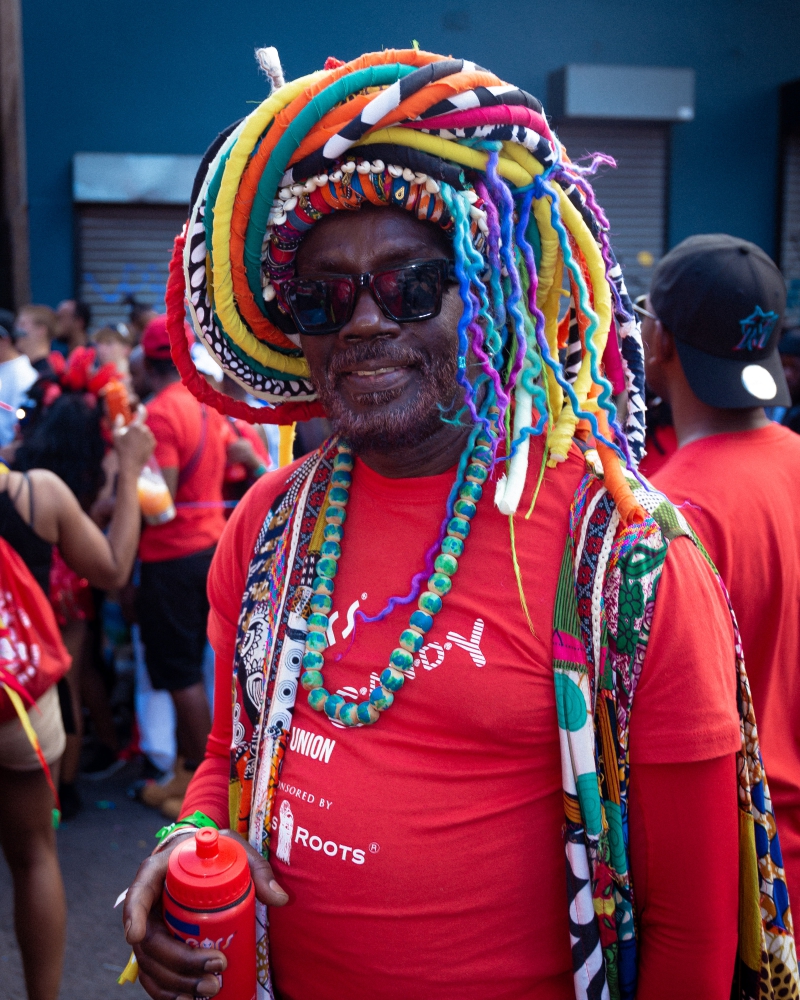
The Keeper of Colour
Identity as Spine Some people attend Carnival, while others carry it. Here colour becomes inheritance rather than decoration. The subject stands calm and steady amid the movement around them, representing the quiet centre that culture provides even when the world becomes noise.
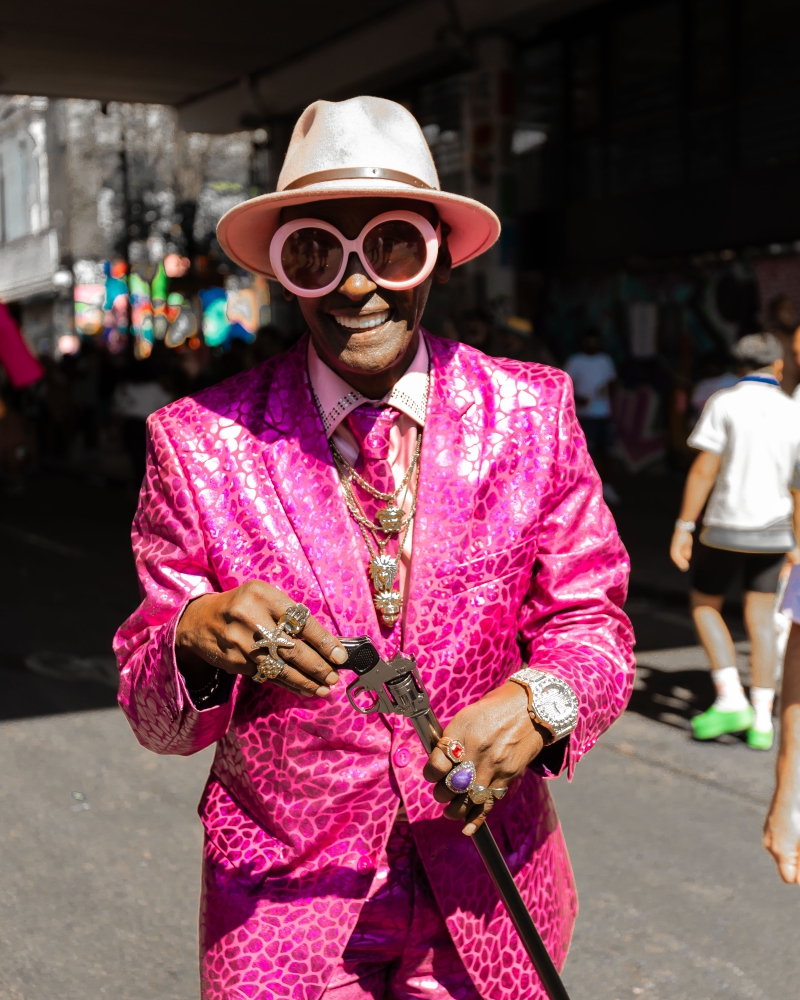
Character Is Culture
The Legend in Pink Every culture holds its living icons. This portrait captures a Caribbean elegance that existed long before trends and will outlive them. Carnival allows elders to appear as legends in full daylight, seen with dignity rather than reduced to nostalgia.
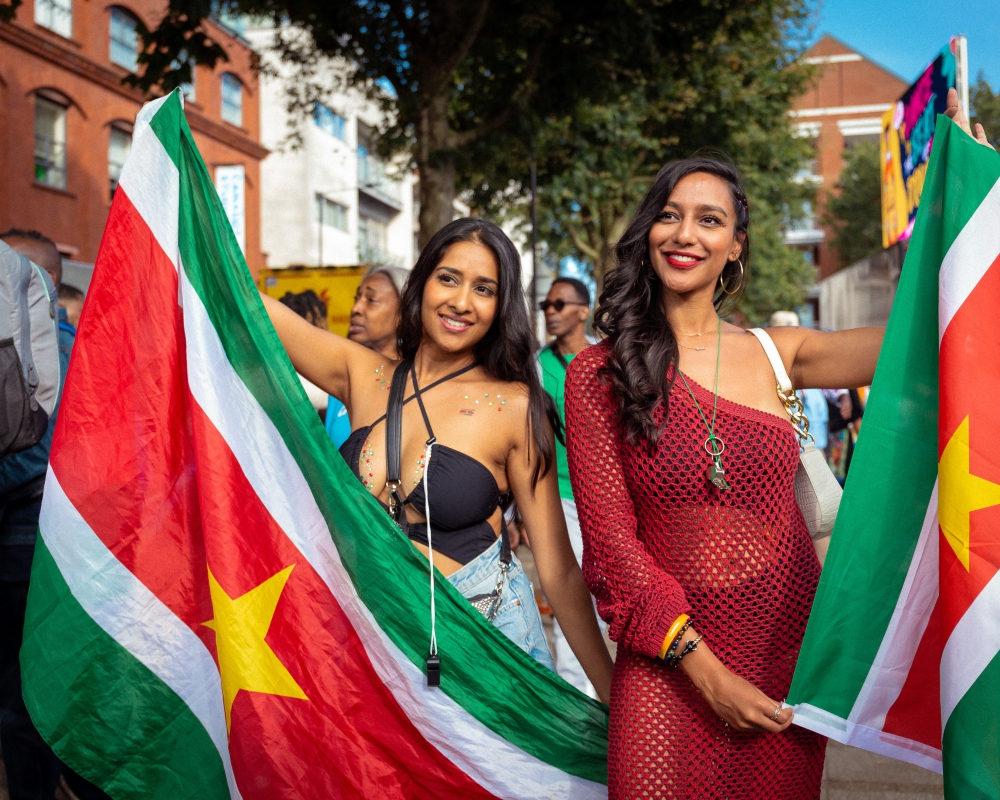
Flags as Language
The Football Frequency Flags function as a language of presence. They declare where people come from while inviting others to join the rhythm. In this moment identity becomes collective; strangers move together like teammates responding to the same frequency.
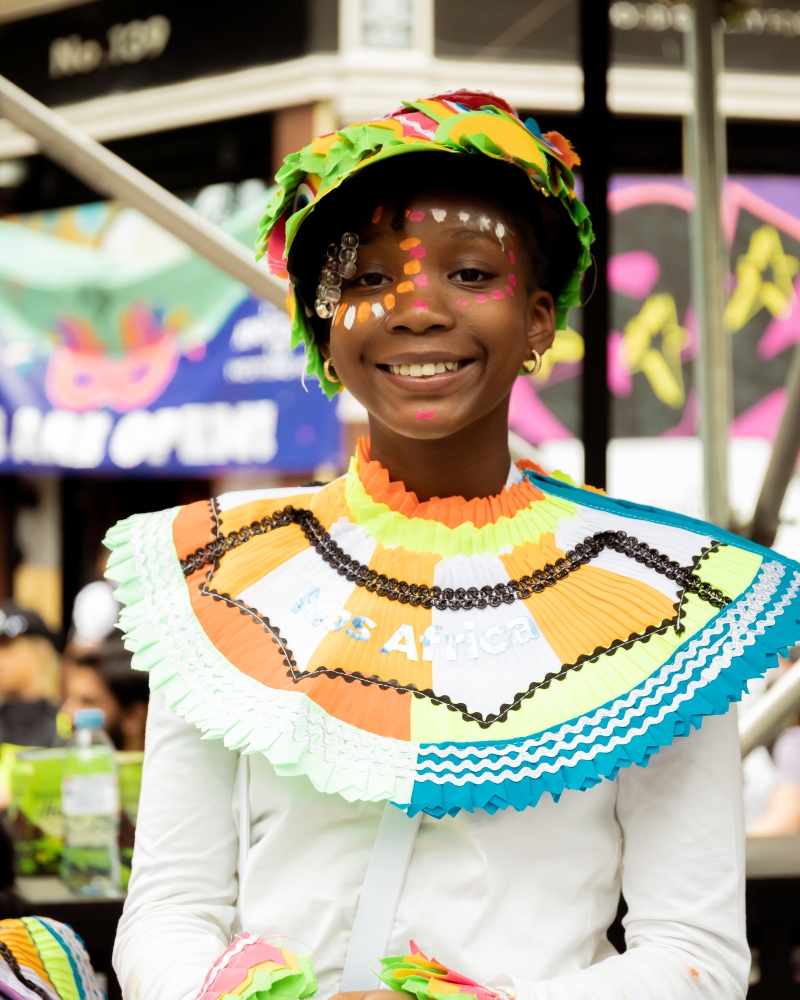
The Child Who Will Remember
The Future Archive This image reveals why the archive matters. Carnival becomes a form of intergenerational education. The child standing here will grow up remembering what it felt like to be inside a culture that celebrated them fully. One day they will look back at this moment and recognise their place within a living history.
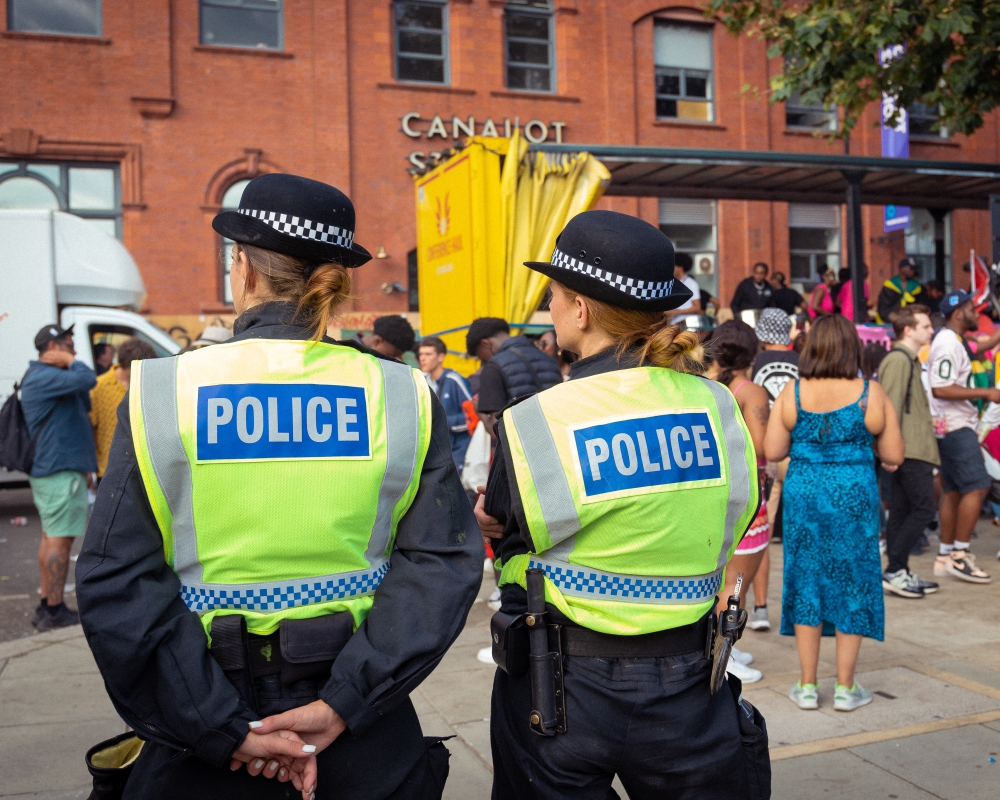
The Guarded Archive
Security as Structure Carnival exists within the architecture of the city. The presence of security reveals an important tension: cultural sovereignty operating inside a public urban framework. The high visibility vests become the silent walls of an open air museum, allowing the celebration to exist safely within the city’s structure.
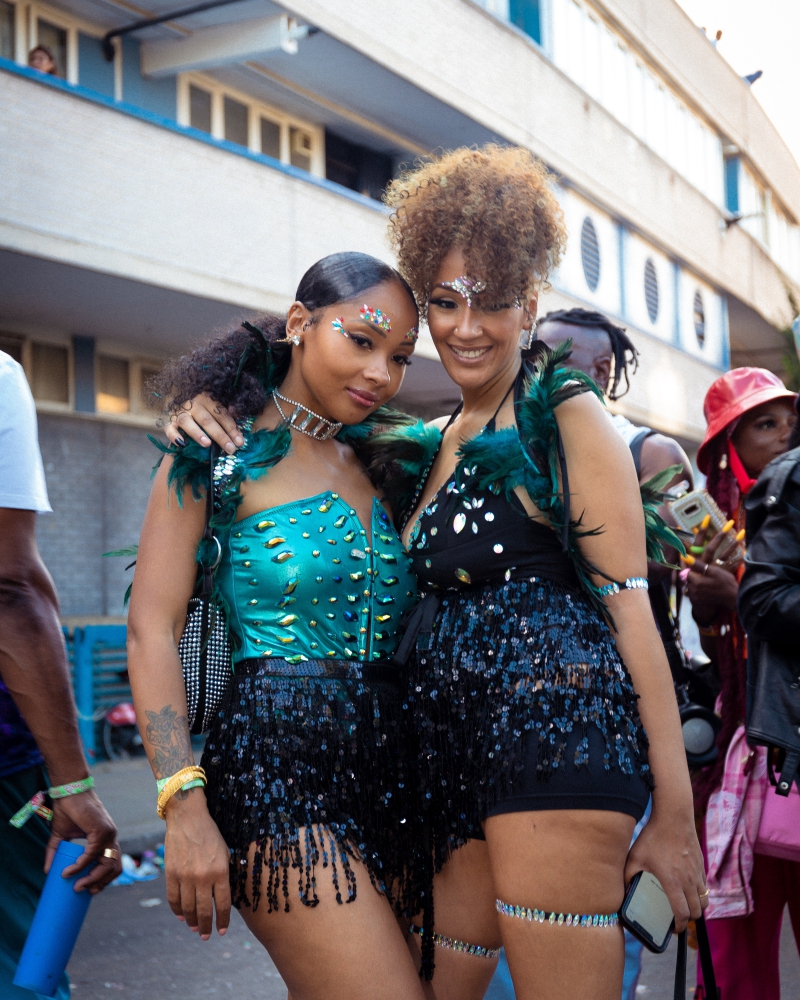
The Intimate Inheritance
The Pulse of the Future The archive ultimately lives within families. This quiet moment between mother and daughter shows that Carnival is not just an event people attend; it is something passed through generations. Their closeness reveals the deeper architecture of survival: love, memory, and continuity.
The Role of the Witness
Olamide Adegboye’s practice sits at the intersection of conceptual photography, cultural memory, and visual testimony. Through his work the camera becomes more than a recording device; it becomes a tool for preservation and ethical witnessing. His practice has grown from personal exploration into a broader cultural responsibility. In 2025, his artistic witness became a permanent part of the United Kingdom’s official cultural record through a landmark commission by the Royal Borough of Kensington and Chelsea. By documenting Notting Hill Carnival with long term intention, he is building a structured visual archive that connects ancestral traditions with contemporary life in London.
In doing so, his work argues that photography can function as more than documentation. It can become a living archive, one that protects cultural presence, affirms identity, and ensures that the images created today become the trusted history of tomorrow.